FR Hi-Vis PPE: When Visibility and Thermal Hazards Overlap
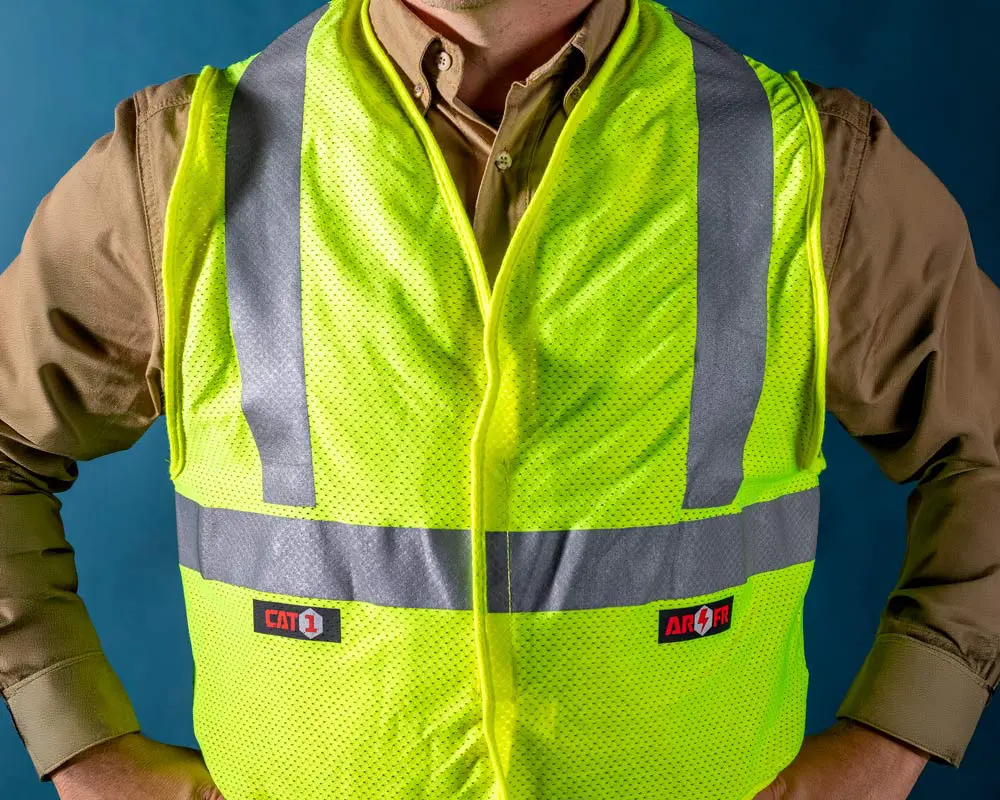
When High-Visibility PPE Also Needs Flame-Resistant Protection
Your crew is wearing the right AR/FR clothing for the job. Then someone hands them a standard hi-vis vest because the site requires it around traffic, forklifts, or other mobile equipment. That simple addition can introduce a gap in the protection the clothing program was designed to provide.
High visibility and thermal protection address different hazards. When workers face both, the vest becomes part of the protective clothing system and needs to be evaluated for arc flash, flash fire, or other thermal exposure, not just visibility.
Key Takeaways
- Meeting ANSI/ISEA 107 high-visibility requirements does not automatically make a garment suitable for arc-flash or flash-fire exposure. Those hazards require separate flame-resistant or arc-rated performance.
- A hi-vis vest should be evaluated as part of the worker’s complete protective clothing system, especially when it is added over AR/FR clothing because of traffic, mobile equipment, or a site rule.
- Start with the hazards, then verify the finished garment’s visibility classification and applicable FR or arc-rated performance. An “FR” label alone may not establish that a vest is appropriate for an electric-arc exposure.
High-Visibility PPE Is Not Automatically Flame Resistant
ANSI/ISEA 107-2020 establishes performance requirements for high-visibility safety apparel. Its purpose is to improve conspicuity, or how easily workers can be seen and recognized around traffic and equipment. Visibility, however, is only one part of the equation when workers also face thermal hazards.
A hi-vis vest worn over AR/FR clothing becomes the outer layer of that protective clothing system. For electric-power work covered by OSHA 1910.269, that outer layer can carry its own requirements. Employers must address clothing that could melt, ignite, or continue burning under the expected exposure.
Under specified conditions, the standard also requires flame-resistant outer clothing. When estimated incident energy exceeds 2.0 cal/cm², workers generally need arc-rated protection equal to or greater than that exposure, subject to listed exceptions.
Those requirements apply specifically to work covered by 1910.269, but they illustrate the larger point: meeting a high-visibility requirement does not automatically make the outer layer appropriate for a thermal hazard.
When High-Visibility and Thermal Hazards Overlap
This overlap often appears when a visibility requirement gets added to an existing protective clothing program.
An electrical contractor, for example, may arrive at an industrial facility in company-issued AR/FR clothing. If the site requires a hi-vis vest around forklift traffic, the contractor now needs to add another layer. A conventional vest handed out at the gate may not have been evaluated against the same thermal hazard as the clothing underneath it.
That added layer can affect the protection provided by the existing AR/FR uniform. Under thermal exposure, a non-FR garment may melt or drip onto the wearer, or ignite and continue burning after the initial exposure.
The same problem can occur in flash-fire environments. Workers may need high visibility around vehicles or equipment while also requiring clothing suitable for short-duration thermal exposure.
PPE requirements do not always arrive as one coordinated package. A traffic or site rule may add a garment to an existing program, so safety teams need to consider how that new layer fits with the protection already required for the job.
Start With the Full Hazard Assessment, Not the Vest
When visibility and thermal hazards overlap, start with the work rather than the vest. The goal is to understand everything the worker may be exposed to before deciding what the outer layer needs to provide. That means looking at both the reason high visibility is required and the thermal hazards associated with the task.
The hazard assessment should answer questions such as:
- Is there potential for electric-arc exposure?
- Is flash fire a credible hazard?
- Does the electrical hazard assessment establish a required arc rating?
- Could an outer garment introduce a melt or ignition hazard?
Those answers define the protection the garment needs. From there, the terminology and product specifications need to match the hazard.
Flame resistant and arc rated describe related but different protective characteristics. As GlenGuard explains in its AR/FR guidance, all arc-rated fabric is flame resistant, but not all flame-resistant fabric is arc rated.
For flash-fire hazards, the clothing program may rely on performance requirements associated with standards such as NFPA 2112. For electric-arc hazards, safety teams need to verify that the arc-rated performance is appropriate for the identified exposure.
That makes “FR vest” an incomplete specification in some applications. The term does not tell safety teams whether the garment is designed for flash-fire exposure, electric-arc exposure, or both, nor whether its protective performance is appropriate for the job.
Building FR Protection Into Your Hi-Vis Program
Once the hazard assessment shows that workers need both high visibility and thermal protection, the vest needs to address both. A standard hi-vis layer may improve visibility, but it should not compromise the protection already required for the job.
GlenGuard FR Hi-Vis is designed for this type of multi-hazard environment. It gives safety teams several features to consider when specifying high-visibility PPE:
- Inherent FR protection: Flame resistance is built into the fabric and is designed for applications with potential arc-flash and flash-fire hazards.
- No Melt, No Drip performance: The fabric is designed not to melt or drip when exposed to heat, an important consideration for an outer layer.
- Published arc ratings: Individual fabric styles list specific arc ratings, so safety teams can compare performance with the exposure identified in the electrical hazard assessment.
- Woven and mesh constructions: Different fabric options give employers flexibility when selecting high-visibility vest materials for the work environment.
Starting with fabric engineered for both visibility and thermal hazards gives garment manufacturers a stronger foundation for multi-hazard protection. From there, the finished garment still needs to meet the applicable requirements for visibility classification, design, labeling, and intended use.
If your crews need high visibility where arc flash or flash fire is also a concern, talk to a GlenGuard expert about FR Hi-Vis options for your application.
FAQ
Does a Class 2 or Class 3 hi-vis vest also provide flame-resistant protection?
No. ANSI/ISEA 107 Performance Classes address high-visibility apparel and how conspicuous the worker needs to be. They do not, by themselves, establish flame-resistant or arc-rated protection. If thermal hazards are present, verify the garment’s applicable FR or arc-rated performance separately.
Can an FR hi-vis vest be worn over non-FR clothing?
An FR vest does not make the clothing underneath suitable for a thermal hazard. The complete clothing system still needs to match the hazard assessment. For work covered by OSHA 1910.269, employers must also address clothing that could melt, ignite, or continue burning under the expected exposure.
How do you know whether a hi-vis vest has a high enough arc rating?
Start with the incident-energy exposure identified through the electrical hazard assessment. Where arc-rated clothing is required, compare that exposure with the garment’s arc rating rather than relying on an “FR” designation alone. Under OSHA 1910.269, required arc-rated protection generally must have a rating at least equal to the estimated incident energy.
What is the difference between NFPA 2112 and ASTM F1506 for FR hi-vis clothing?
They address different hazards. NFPA 2112 addresses flame-resistant clothing for short-duration thermal exposures from fire. ASTM F1506 covers flame-resistant and electric arc-rated protective clothing. The hazard assessment determines which performance requirements are relevant to the job.